Lighting is one of the most important creative tools in photography and videography. It determines not only what the camera sees, but also how a subject feels, where the viewer looks and what emotion an image creates.
For many types of photography and video production, photographers and cinematographers look for large, soft light sources. Soft light produces gradual transitions between highlights and shadows, tends to be flattering on faces and gives a subject a polished, natural appearance.
But soft light is not always the right choice.
Sometimes the most effective lighting decision is to deliberately do the opposite.
What Is the Difference Between Hard Light and Soft Light?
The difference between hard and soft light is primarily the size of the light source relative to the subject.
A large light source produces softer transitions between light and shadow. A small light source produces harder transitions and more defined shadows.
Soft light generally creates:
- Gradual transitions between highlights and shadows
- Softer facial shadows
- More forgiving skin tones
- A polished or natural appearance
- A sense of openness and even illumination
Hard light generally creates:
- Sharp, defined shadows
- Strong contrast
- Distinct transitions between light and darkness
- More dramatic facial contours
- A stronger sense of shape and texture
Neither approach is inherently better.
The important question is what the lighting is supposed to communicate.
Why Photographers Often Prefer Soft Light
When photographing people, particularly portraits, soft light is often the safer and more predictable choice.
A large soft light source can wrap around a subject's face and produce gradual transitions from highlight to shadow. This can minimize distracting shadows and create a flattering appearance.
This is why photographers often use large modifiers such as softboxes, umbrellas or large diffusion frames.
In many commercial and portrait applications, that approach makes sense.
The goal may be to make the subject look approachable, polished and natural.

But there is another possibility.
Instead of trying to eliminate the shadows, what happens if the shadows become part of the image?
An Experiment With Hard Light
We recently experimented with hard light specifically to explore what could be.
Rather than using a large, soft source to create an even exposure across the subject, we intentionally used hard light sources to illuminate only specific portions of the subject.
The rest of the subject was kept in complete darkness, reading as black in the image.
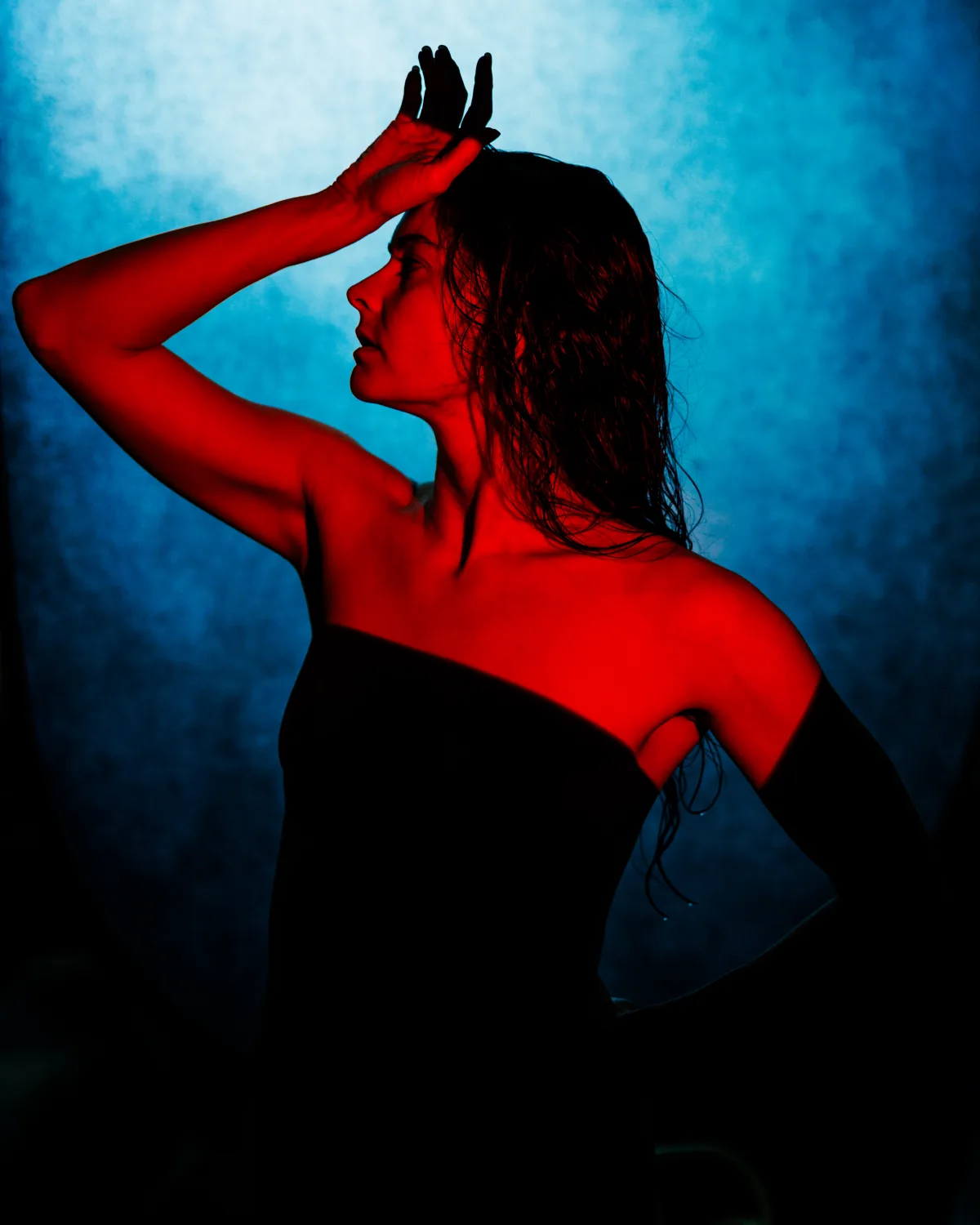
This creates a very different visual language.
Instead of a long, smooth transition between light and shadow, there is a distinct boundary between the exposed portion of the image and the black.
The result is more graphic and dramatic.
The technique evokes drama, and makes the audience focus specifically on specific portions of the frame.
The darkness becomes an intentional compositional element rather than something the photographer is trying to correct.
When Darkness Becomes Part of the Composition
One of the interesting things about hard light is that it gives the photographer control over what the audience is allowed to see.
With conventional portrait lighting, the objective is often to make the subject clearly visible.
With this approach, visibility itself becomes part of the creative decision.
A photographer can ask, “What should the viewer see?”
But they can also ask, “What should the viewer not see?”
Allowing part of a face or body to disappear into shadow can create mystery, tension, drama or intimacy.
The effect can be particularly powerful when the illuminated area is carefully positioned. A small change in the position of the light can completely change which features are revealed and which disappear.
The Reverse Approach: Using Soft Light Without Lighting the Subject
The same principle can work in the opposite direction.
While shooting a wedding for a friend, I had an opportunity to experiment with a very different lighting approach.
Instead of using a light source to illuminate the couple, I used a large, soft light source behind them.
The couple themselves remained largely unlit.
The result was almost the inverse of conventional portrait lighting.
Rather than creating a detailed, evenly illuminated portrait of the couple, the light created a soft, bright outline around them. The subjects became dark silhouettes against a bright white frame.
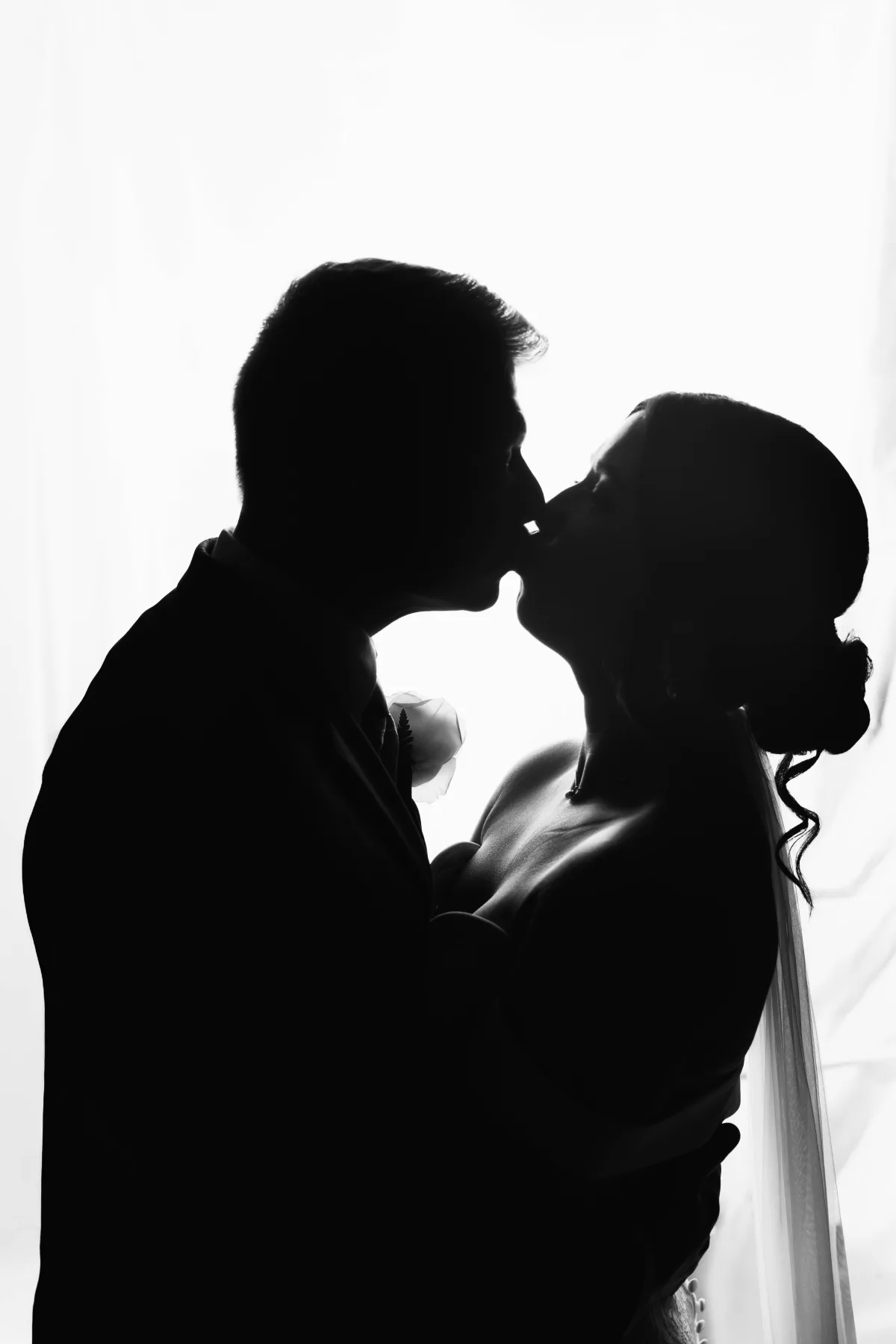
The light was still soft.
But instead of using that softness to illuminate the subjects' faces, it was used to define their edges.
This created an image that would have been difficult to achieve by simply following conventional portrait-lighting techniques.
Lighting Is About More Than Exposure
A common misconception is that the primary purpose of lighting is to make sure the subject is properly exposed.
Exposure is certainly important.
But lighting is also one of the primary storytelling tools available to a photographer or cinematographer.
Lighting can communicate:
- Emotion
- Time of day
- Location
- Mood
- Character
- Mystery
- Tension
- Beauty
- Isolation
- Energy
A bright, evenly lit portrait communicates something very different from a face partially disappearing into darkness.
A wedding portrait lit evenly from the front communicates something different from a couple appearing as silhouettes against a glowing background.
The camera records the light.
The lighting determines what the camera has to say.
Breaking Conventional Lighting Rules
Photography has many established techniques for producing predictable results.
Those techniques are valuable. Understanding how to create flattering soft light, properly expose a subject and control shadows is fundamental to professional photography.
But understanding the rules also makes it possible to deliberately break them.
The goal is not to use hard light simply because it is unusual.
The goal is to understand why you are choosing it.
If a hard light creates the emotion you want, it may be the right light.
If a silhouette communicates an idea more effectively than a traditionally lit portrait, the silhouette may be the better photograph.
If darkness creates more mystery than illumination, there is no reason to fill the shadows simply because conventional portrait lighting says you should.
The Best Lighting Choice Depends on the Story
There is no universally correct lighting setup.
A corporate headshot may benefit from clean, soft and flattering illumination.
A luxury advertisement may require controlled highlights and carefully shaped shadows.
A dramatic commercial may benefit from hard, directional light.
A wedding may call for soft, romantic backlighting.
A documentary interview may require natural-looking illumination that feels consistent with the environment.
The lighting should serve the image.
Professional Lighting Is About Making Deliberate Choices
Professional photography and videography are not simply about having expensive cameras and lights.
The equipment gives the photographer or cinematographer options.
The real creative decision is determining which option best serves the image.
Sometimes that means using a huge soft source to create beautiful, gradual shadows.
Sometimes it means using a small hard source and allowing half the subject to disappear into darkness.
Sometimes it means putting the light behind the subject and allowing the subject itself to become a silhouette.
The important thing is that the choice is intentional.
In photography and videography, breaking from convention does not automatically make an image better.
But when a creative decision is made deliberately, it can produce an image that people remember.
And sometimes, the most interesting photograph is the one that refuses to follow the usual rules.
FAQ
What is the difference between hard light and soft light in photography?
Hard light produces sharp, defined transitions between light and shadow, while soft light creates gradual transitions. The difference is primarily determined by the size of the light source relative to the subject. Hard light tends to create stronger contrast and more defined shadows, while soft light generally produces a more gradual and flattering appearance.
Is hard light better than soft light for portraits?
Neither hard light nor soft light is inherently better for portraits. Soft light is often preferred because it produces flattering, gradual shadows, but hard light can be more effective when the goal is to create drama, contrast, mystery or a more graphic visual style. The best choice depends on what the image is intended to communicate.
Why do photographers use soft light?
Photographers often use soft light because it creates gradual transitions between highlights and shadows and can produce a flattering appearance on faces. Large softboxes, umbrellas and diffusion frames are commonly used to create soft light for portraits, commercial photography and other applications where an even, polished appearance is desired.
When should a photographer use hard light?
Hard light can be useful when a photographer wants strong contrast, defined shadows, dramatic facial contours or a more stylized image. It can also be used to selectively illuminate portions of a subject while allowing other areas to fall into darkness.
Can hard light be used for professional photography?
Yes. Hard light is a professional lighting technique that can be used intentionally to create a specific visual style. While soft light may be more conventional for some types of photography, hard light can be particularly effective for editorial, fashion, advertising, conceptual and dramatic photography.
Does professional lighting always mean using soft light?
No. Professional lighting means choosing and controlling light intentionally. A professional photographer or cinematographer may use soft light, hard light, or a combination of both depending on the subject, environment, desired mood and purpose of the image.
How does lighting affect the mood of a photograph?
Lighting can significantly influence the emotional character of an image. Soft, evenly distributed light can create an open, natural or polished appearance, while hard directional light and deep shadows can create drama, tension, mystery or intensity.
Why would a photographer intentionally leave part of a subject in darkness?
Leaving part of a subject in darkness can make the shadows an intentional part of the composition. It allows the photographer to control what the viewer sees and what remains hidden, potentially creating mystery, tension, intimacy or visual emphasis.
Can soft light be used to create a silhouette?
Yes. Soft light can be positioned behind a subject rather than directly illuminating the subject. This can create a bright background or rim around the subject while leaving the subject itself comparatively dark, producing a soft-edged silhouette.
What is the most important consideration when choosing photography lighting?
The most important consideration is what the lighting needs to communicate. Lighting should support the subject, story, mood and intended visual style. The best lighting setup is not necessarily the one that produces the most even or flattering exposure, but the one that best serves the image.
Have a story worth telling?
Get in touch →